The Academy: Connecting Brand, Content, and Delivery
Helping a community program tell its full story and carry it through to a working website.
Led strategy, content direction, and delivery coordination for The Academy's rebrand and website, connecting a family-centered experience to the team's everyday work with Reasonbook, Stage1, and TraceLab.
TL;DR
Challenge → Approach → Results
Challenge
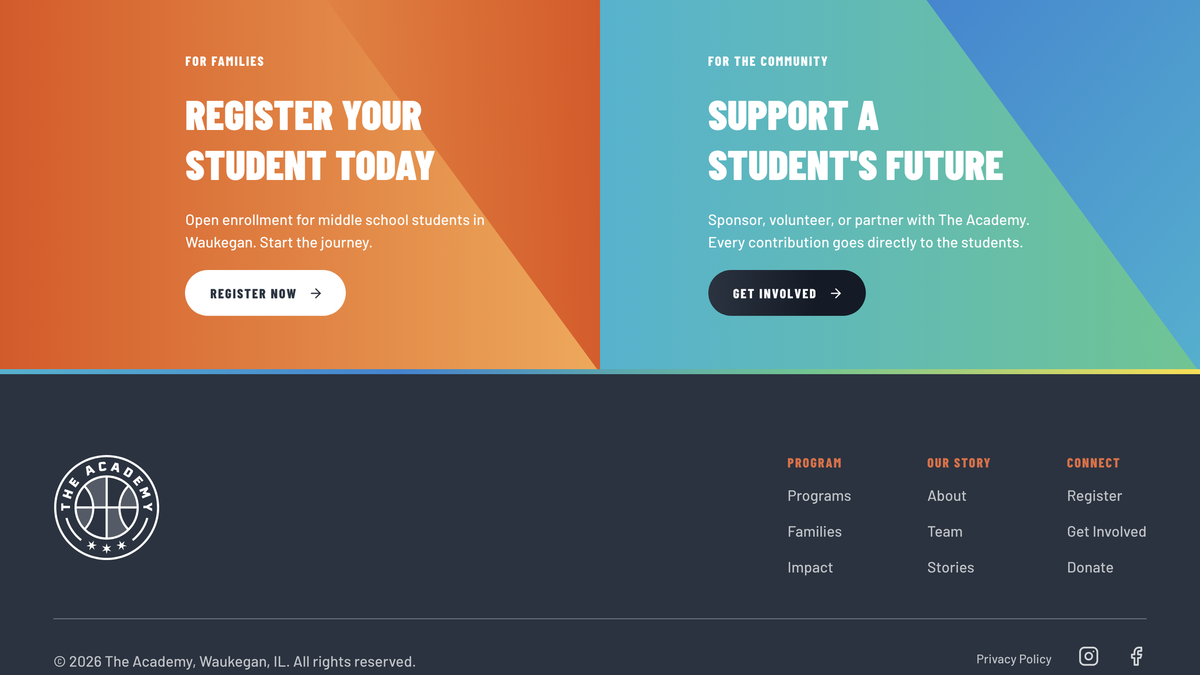
The Academy needed a brand and website that represented its full program across Education, Athletics, and Exploration, with clear paths for families and supporters.
Approach
Connected brand strategy, an evidence-based content audit, information architecture, and page-level briefs, then coordinated the client, visual design, and Webflow work through launch.
Results
A new brand system and launched Webflow website, with dedicated family resources, a clearer account of the program, and an organized foundation for ongoing content.
Outcomes
- Brand strategy and voice translated into the website
- Family-centered navigation and content architecture
- Page briefs, migration planning, and launch review
- AI integrated into research, analysis, and project coordination
Resources
Making the whole program visible
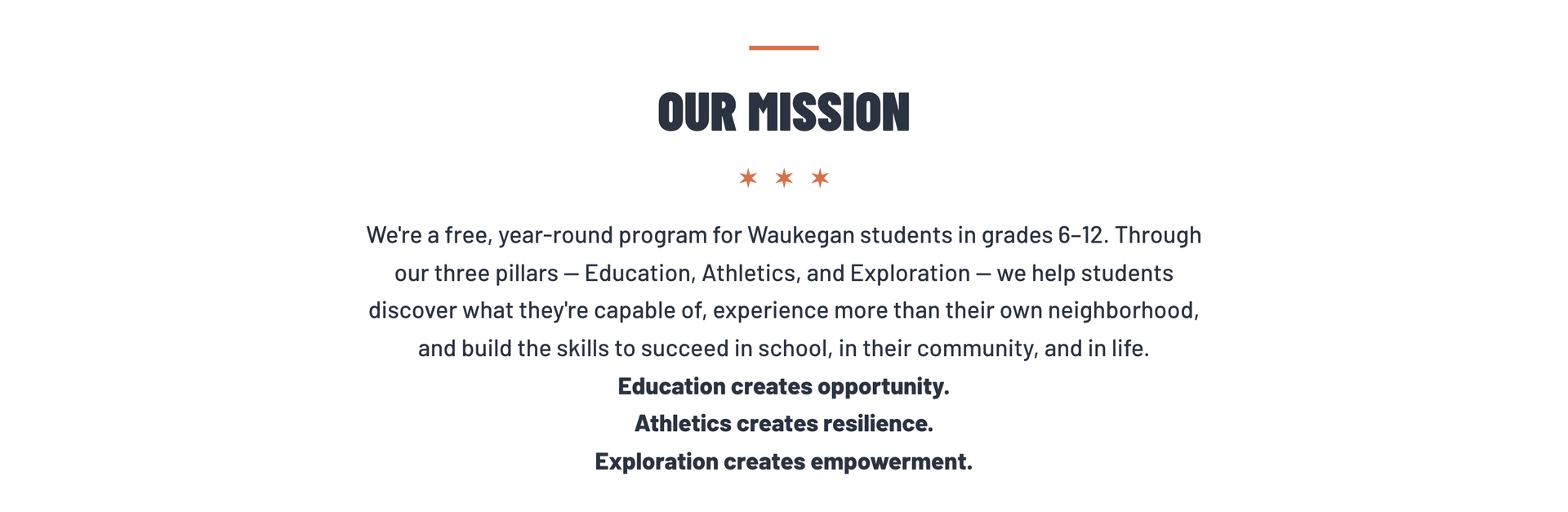
The Academy is a free, year-round program for students in Waukegan, Illinois, operated by A Bigger World. Education, Athletics, and Exploration are the three pillars of its work. The engagement began with a question about how its identity and website could represent that full experience.
Basketball was a recognizable part of the existing identity. Academic support, mentorship, college visits, and exploration needed comparable attention. Families needed to understand the program and find practical information. Supporters needed a clear picture of its work and ways to participate. The brand, language, and site structure had to make those priorities visible together.
I led strategy, client communication, content direction, and delivery coordination across the rebrand and website project. My responsibility was to keep the decisions connected as the work moved from discovery into visual design, content development, and implementation.
Turning strategy into decisions people could use
We established The Academy as the primary public identity, with A Bigger World providing the organizational context. That gave the design and content work a consistent starting point.
The voice work was equally practical. We developed guidance for direct, warm language grounded in actual program activity. Students and families remained the subjects of the story. Claims needed specific support, and the tone had to work across family information, program descriptions, and supporter communications.
I translated that direction into creative briefs and page-level content guidance. Each page had a purpose, an audience, a sequence of information, and a next action. The briefs also identified the source material and assets needed to complete the page. This made the relationship between strategy and execution explicit: a content decision could be traced back to the job that page needed to do.
Building the structure from evidence
The content audit started with the existing site. I used Stage1 to capture its public structure and inspect the routes behind the navigation. That evidence mattered because a page label alone did not reliably describe what was there: some routes repeated content, some belonged to older registration flows, and others needed a different home in the new architecture.
The resulting migration map gave each route a disposition: keep, merge, replace, or retire. It also made the new work visible. A dedicated Families destination needed a coherent set of resources, rather than a copy of an existing page under a new label.
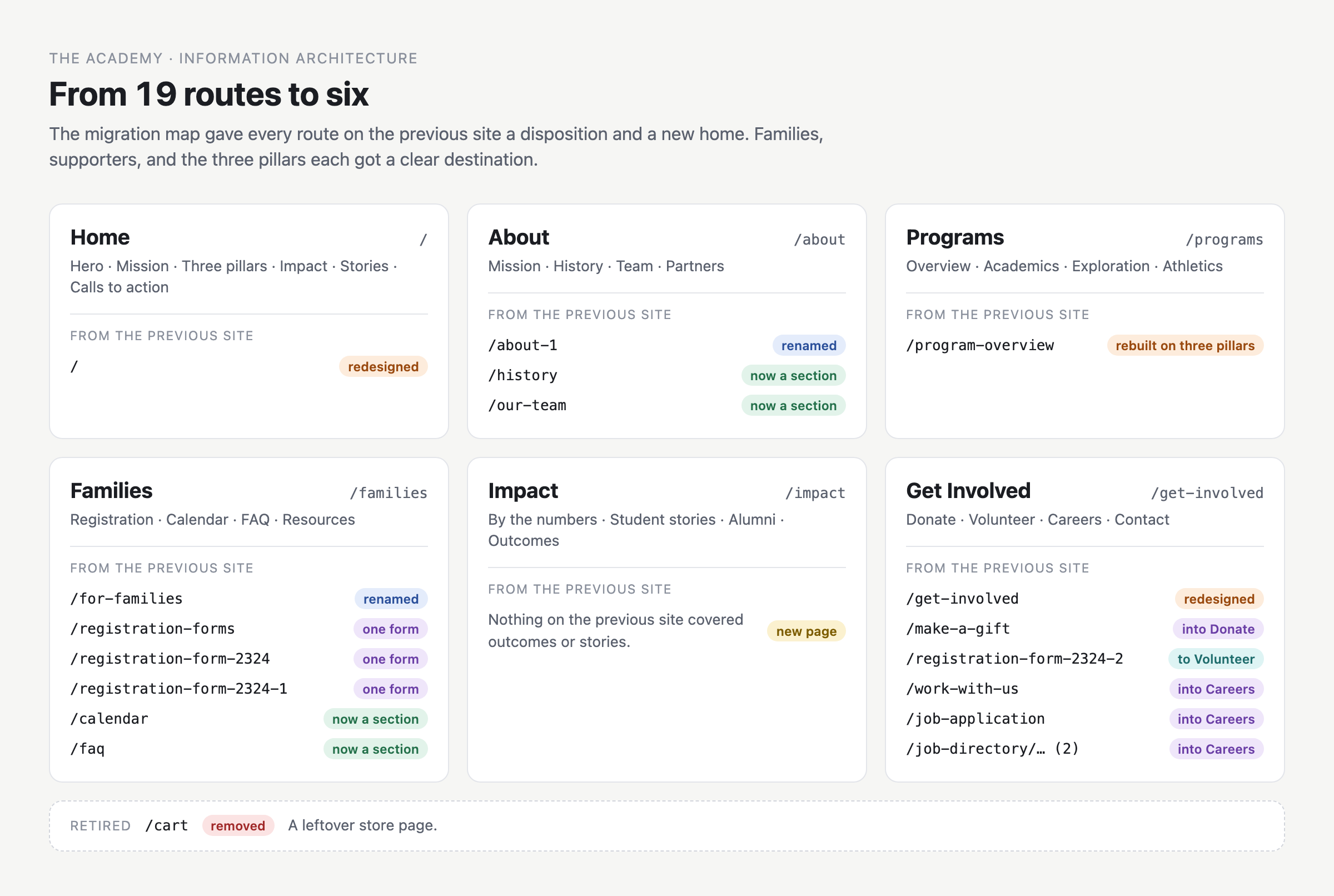
Working with Drew and the client team, I helped shape a compact structure around About, Programs, Families, Impact, and Get Involved. Family questions, registration, and calendar information had a common destination. Program content could represent all three pillars. Supporter actions had a clear home without taking over the experience.

Those choices carried through to wireframes and content briefs. I checked the artifacts against the decision record as they evolved, so a prototype, an older draft, or a familiar label did not silently become the authority for the final build.
Keeping the work connected through launch
A strategy document only helps if the next person can act on it. I kept a regular working rhythm with the client and our collaborators, turning discussions into decisions, assigned content needs, review material, and implementation feedback.
As the website took shape, the work became more specific: reconciling language across pages, confirming the source of a claim, checking registration and supporter pathways, and reviewing the migration from the previous site. These were part of carrying the original intent into the details people would encounter.
The engagement produced a new brand system and a launched Webflow website. My contribution spanned the strategy, content architecture, coordination, and launch review that connected them. The delivered site brings the program’s story, family resources, and supporter pathways into one organized experience.
How AI and my tools supported the work
AI was part of my working process throughout the engagement. I used it to help examine source material, develop and revise working documents, compare artifacts, and prepare the next decisions. Three tools I build and use supported that process:
- Stage1 supplied captured evidence from the existing website for the content inventory and migration analysis. It gave the review a concrete starting point that I could inspect and correct.
- TraceLab held research on nonprofit branding, community context, and audience needs. Research stayed available as the questions changed from positioning to content and implementation.
- Reasonbook, then called CMOS, maintained project context, decisions, missions, and session history across the engagement. I could return to the reasoning behind a choice and carry it into the next brief or review.
The useful connection was between evidence, decisions, and the next piece of work. AI helped me operate across those materials; client conversations and the judgment of the team determined what we put into the world. The engagement also informed my broader writing about how research, context, and decisions survive the handoffs in AI-assisted work.
A shared delivery
Katie Clementz led the brand identity and visual design. Drew Eastmead led the Webflow development and technical implementation. Mary Weingartner contributed nonprofit and stewardship strategy. The Academy’s leadership and staff supplied the program knowledge, content, and decisions that grounded the work.
My role was to connect those contributions: make the problem clear, turn the direction into usable work, and stay involved through delivery. This is how I approach consulting today, combining design and product judgment with hands-on analysis and an AI-supported working practice.