Industrial IoT Design System — Uptake
Design system for real-time industrial dashboards and safety-critical alerts across multiple verticals.
Built and led a 12-person UX team and an industrial IoT design system that unified time-series, alerting, and diagnostic patterns across a suite of ML and data products.
TL;DR
Challenge → Approach → Results
Challenge
Each product team was designing its own dashboards and alert flows, creating inconsistent experiences and slowing delivery for safety-critical workflows.
Approach
Defined canonical patterns for time-series visualization, alarm triage, and investigation flows across industries. Created a token- and component-based system tuned for dense, dark-first industrial environments.
Results
Reduced time-to-insight by roughly 90% for critical workflows by standardizing patterns and surfacing the right signals. Accelerated production by roughly 4× via reusable dashboards and patterns shared across teams.
Outcomes
- Reduced time-to-insight by ~90% for critical workflows
- Accelerated production by ~4× via reusable patterns
- 12-person UX team built and led
- Industrial IoT design system spanning multiple verticals
- Improved trust and adoption among industrial users
The Industrial Software Challenge
Rethinking UX for Industrial Environments
In 2017-2018, industrial software was characterized by complex, training-intensive interfaces designed for technical specialists. Most Industrial IoT solutions required extensive onboarding and ongoing support, creating barriers to adoption and limiting value realization.
The fundamental insight: Traditional enterprise UX approaches, optimized for office workers using computers, didn’t address the unique needs of industrial environments where users ranged from C-suite executives to field mechanics operating in demanding physical conditions.
Core Challenges
- Extreme user diversity: From data scientists to mechanics, each with different technical proficiency and environmental constraints
- Data complexity: High-volume, highly variable IIoT sensor data requiring industry-specific visualization approaches
- Trust and transparency: AI recommendations needed contextual evidence for industrial user acceptance
- Speed to value: Reducing time from data ingestion to actionable insights in time-sensitive industrial operations
- Environmental constraints: Designing for harsh conditions, mobile usage, and safety-critical decisions
Industrial UX Methodology
Defining a New Discipline
I developed “Industrial UX” as a specialized extension of Enterprise UX, recognizing that digital transformation in industrial settings required fundamentally different approaches:
| Enterprise UX Focus | Industrial UX Extension |
|---|---|
| Individual Users: Easy-to-use applications for productivity | Specialized Users: Ease-of-use regardless of proficiency level or environment |
| Groups of Users: Coordinating workflows for enterprise goals | Environmental Constraints: Designing for harsh conditions and mobile usage |
| The Business: Minimizing total cost of ownership | Industry Expertise: Leveraging domain knowledge for context-specific solutions |
User-Centered Design Process
Implemented comprehensive 5-phase UCD process:
- Discover: Problem space exploration through market, SME, and user research
- Define: Mapping opportunities to business and user value
- Design: Solution space iteration through prototyping and design
- Develop: Agile development with continuous UX involvement
- Validate: User testing and engagement measurement for continuous improvement
Platform Architecture & User Types
Dual User Ecosystem
The platform served two distinct user types requiring different UX approaches:
Platform Users (Enterprise UX Approach)
Sophisticated data professionals: engineers, data scientists, integration specialists, subject matter experts
- Maximum access and flexibility including beyond-UI integration capabilities
- Robust help and documentation with developer portals and API access
- “Learn by doing” approach with safety nets for error prevention
- Advanced tools: Connector SDKs, Uptake IO plugins for 3rd party data science tools
APM Users (Industrial UX Approach)
Industry workers across the spectrum: executives to field technicians, each requiring different support levels
- Recognition of industry expertise and domain knowledge
- Minimal training requirements for successful tool usage
- Contextual information surfacing for decision support
- Trust-building through transparency in AI recommendations
- Mobile-first design for field-based users
Technical Platform Innovation
Four-Layer Architecture
1. Core Platform Services
- Secure multi-cloud and edge infrastructure
- IT/OT data ingestion with integrity validation
- Asset Graph and Learning Twins technology
- Continuous data monitoring and quality assurance
2. Data Science Engines
- Failure Prediction Engine: Predicting catastrophic asset failures
- Anomaly Detection Engine: Identifying operational deviations
- Recommendations Engine: Generating actionable next steps
- Image Analytics Engine: Converting imagery into situational analytics
- Dynamic Rules Engine: Custom alerting logic
- Industrial Weather integration for operational impact forecasting
3. Application Studio
- Visual canvas-based editors with drag-and-drop configuration
- Low/no-code application building capabilities
- Templates and components for rapid development
- Industrial logic incorporation including failure modes and expert knowledge
4. Data Sources Integration
- Machine data: Edge sensors, time-series, SCADA systems
- Enterprise data: ERP, asset management, work order systems
- Ambient data: Market data, operational benchmarks, drone imagery
- Curated industrial data: Weather, traffic, geospatial information
Data Visualization Innovation
Industrial-Specific Visualization Challenges
Developed specialized approaches for IIoT data characteristics:
- High volume and variability characteristic of industrial sensor data
- Data exploration and literacy considerations for diverse user technical levels
- Industry-focused modifications where common visualizations break down
- Environmental context integration for field-based decision making
Contextual Information Strategy
Key differentiator was surfacing varying levels of contextual information based on workflow understanding:
- Transparency: Making data science processes understandable to industrial users
- Trust: Providing evidence and context for AI-driven recommendations
- Understanding: Ensuring users receive model results with relevant context
- Action: Enabling users to accept predictions and take appropriate action
Cross-Disciplinary Collaboration
Integrated Product Development
Led UX integration across three critical pillars:
- Business Strategy: Viability and market opportunity assessment
- Design: Desirability and user experience optimization
- Engineering: Feasibility and technical implementation
This collaborative approach ensured solutions addressed “the right problem” for customers while maintaining technical feasibility and business viability.
Sales to Deployment Engagement
UX engagement spanned the entire customer journey:
Early Customer Engagement
- Discovery workshops to uncover problems and challenges
- Market research and SME interviews
- Business value mapping and opportunity assessment
Pilot and Assessment Phase
- Conceptual screen design and prototyping
- Future-state visualization using desired data
- User validation and stakeholder feedback
MVP Development & Iteration
- Product vision development through UX lens
- Agile design process integration
- Continuous user validation throughout development
Industry Applications & Impact
Cross-Industry Platform Success
The platform successfully deployed across diverse industrial sectors:
Asset Operations
- Condition-based monitoring
- Predictive asset management
- Reliability-centered maintenance
- Quality and safety management
- Productivity and efficiency optimization
Service Management
- Field service execution
- Shop execution
- Labor scheduling and dispatch optimization
- Contract and customer management
Parts and Inventory
- Vendor and inventory management
- Warehouse management
- Parts tracking and counter management
- Forecasting and optimization
Design System & Standards
Industrial Design System Framework
Created comprehensive design system for complex industrial applications:
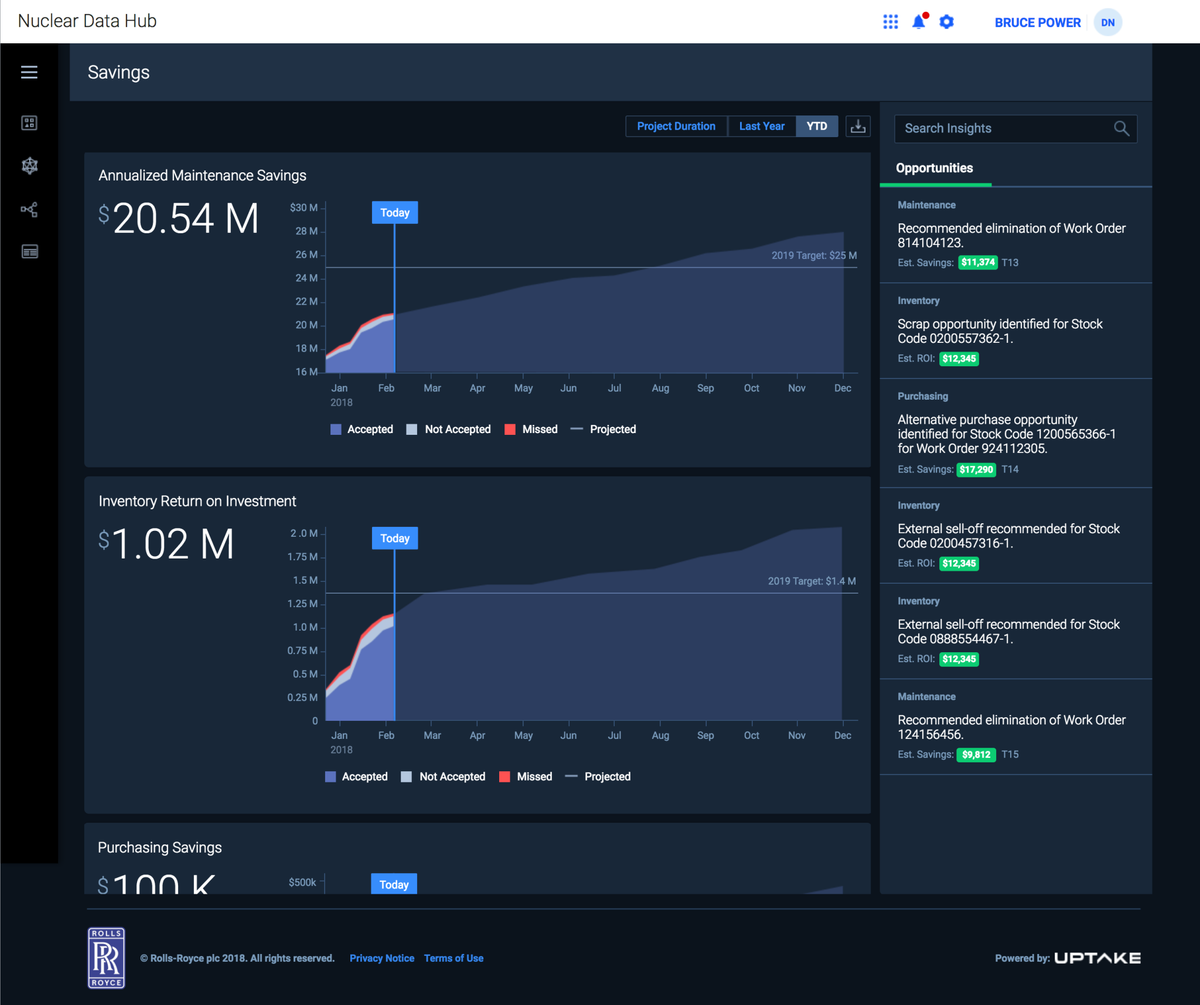
- Industrial-Specific Visualization: Time-series with threshold bands, status badges, histogram cards, mini-sparklines
- Alert Semantics: Severity + state model with iconography and color aligned to safety guidelines
- Design Tokens: Color, spacing, typography with dark-first palettes for control rooms—a precursor to the systemic guardrails and OKLCH policies used in OODS Foundry.
- Accessibility Standards: WCAG compliance with industrial environment considerations
Documentation & Governance
- Usage guidelines: Do/don’t examples and UI state patterns
- Copy patterns: Consistent voice matching users’ real-world mental models
- Versioning and RFCs: Systematic evolution and contribution processes
- Visual regression checks: Automated quality assurance
Measurable Outcomes & Impact
Business Impact
- Accelerated sales cycles: Discovery and research uncovered new opportunities
- Risk mitigation: Early UX engagement identified and solved right problems
- Revenue creation: Low-onboarding solutions reduced support costs
- Market differentiation: Industrial UX approach created competitive advantage
User Adoption Success
- Minimal training requirements: Products designed for immediate usability
- Cross-industry deployment: Successful adoption across rail, wind, construction, mining
- User empowerment: High-value work focus regardless of technical expertise
- Trust building: Transparent AI recommendations increased user confidence
Technical Achievements
- Data science innovation: Purpose-built industrial AI with domain expertise
- Platform scalability: Handling diverse industrial data sources and scales
- Edge integration: Real-time processing at asset locations
- Enterprise integration: Seamless connection with existing systems
Industry Influence & Methodology Contributions
Methodological Innovations
- Industrial UX Framework: New discipline bridging enterprise and consumer UX approaches
- User Archetype Development: Comprehensive user models for Platform and APM users
- Data Visualization Standards: Industry-specific approaches to complex data presentation
- Cross-Disciplinary Integration: Successful UX integration throughout technical product development
Market Impact
Uptake’s approach influenced the broader Industrial IoT market by demonstrating that sophisticated AI/ML capabilities could be made accessible to diverse industrial users through thoughtful user experience design. The Industrial UX methodology has since been adopted and adapted by other industrial technology companies.
Key Insights & Lessons Learned
Strategic Insights
- Industrial digital transformation is different: Traditional enterprise UX approaches don’t directly translate
- User diversity requires flexible design: Single solutions must serve users from executives to mechanics
- Trust is critical: Industrial users require transparency and context to accept AI recommendations
- Domain expertise matters: Deep industry knowledge must be embedded in both data science and UX
- Early UX engagement drives success: User experience considerations from sales through deployment improve outcomes
Design Principles for Industrial Environments
- Recognition over training: Leverage existing industry expertise rather than requiring new learning
- Context over complexity: Surface relevant information based on user role and workflow
- Trust through transparency: Make AI decision-making processes visible and understandable
- Environment-first design: Account for physical constraints and safety requirements
- Progressive capability: Support both novice and expert use cases within the same interface
Legacy & Continued Influence
The Industrial UX methodology developed at Uptake established new standards for industrial software design and continues to influence the industry. The project demonstrated that complex, data-science-driven industrial solutions could be made accessible and valuable to users across the entire industrial spectrum.
Most importantly, it showed that user experience design, when deeply integrated with business strategy and engineering from the earliest stages, could create competitive advantages and drive successful digital transformation in traditional industrial sectors.